It is tempting to start with the fun part. The look, the lighting, the edit, the track. But a storyboard is just a plan for how to tell a story, and if the story underneath is thin, no amount of craft will save it. The most common reason a polished piece falls flat is not that it was badly made, it is that there was never much to say in the first place.
Every piece needs one true thing
Before we sketch a single frame, we find the one true thing the work is about, the idea that would still be worth telling if you had no budget and no camera. It might be a tension, a belief, a small human truth the brand can honestly claim. If you cannot say it in a sentence out loud and feel it land, the storyboard is premature.
Conflict is what makes people lean in
Stories move because something is at stake. Too much brand work removes every obstacle and every doubt, leaving a frictionless world where nothing is ever hard, and nothing frictionless holds attention. The work that grips people acknowledges the real tension its audience feels, then earns its resolution. Comfort is forgettable; a little honest friction is not.
Structure is invisible when it works
A good narrative has a shape, a setup that promises something, a middle that complicates it, a turn that pays it off. Audiences do not consciously notice structure, but they feel its absence as a vague sense that a piece "dragged" or "went nowhere". We spend real time on the skeleton, because everything visible hangs on it.
Find the story in the room, not the brief
The best material rarely comes from the strategy deck. It comes from a founder saying something offhand, a customer describing a bad day, a detail nobody thought was interesting. We interview, we listen, and we look for the moment where someone stops performing and says something real. That moment is usually the whole film.
Only then, the storyboard
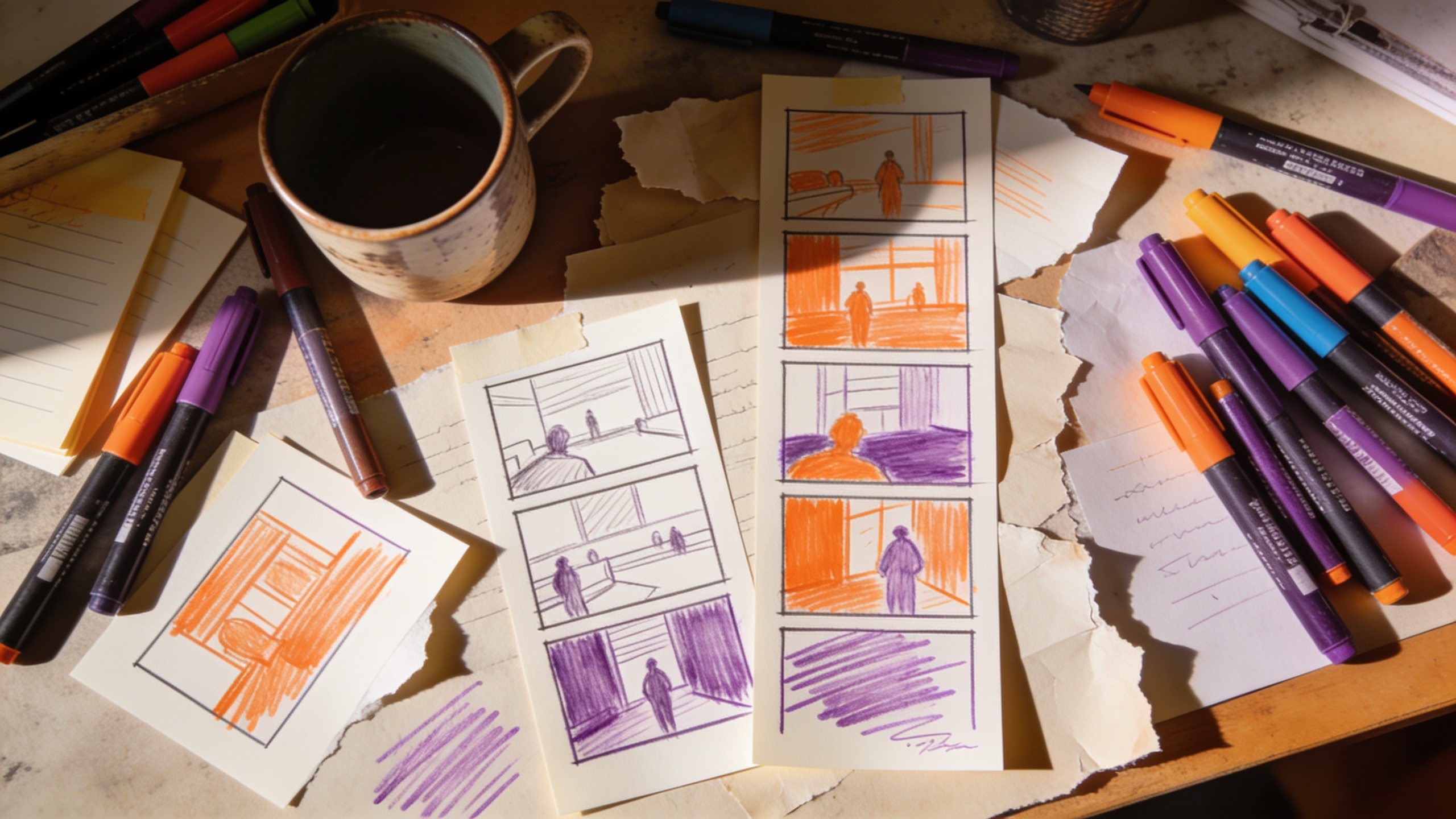
Once the story is solid, the storyboard becomes easy, because now every choice has a reason. The shot exists to serve a beat; the cut lands on a turn; the music carries an emotion the narrative already earned. Craft in service of a real story is what people remember. Craft in service of nothing is just decoration.